
What’s the risk of legionella in holiday lets, Winter off-season
It’s because the winter off-season presents a significant risk to vacant holiday lets; one that can go undetected until the summer season comes around again…
What’s the problem?
During the summer months when your holiday let is occupied by guests, the hot and cold water systems are routinely in use.
Storage tanks and pipes are regularly being flushed through, so the water inside them doesn’t get a chance to stagnate.
During the off-season, though, your water systems can go unused for months on end; and any water left inside the tanks and pipework can become a breeding ground for all kinds of nasty pathogens; including our old adversary, legionella bacteria.
Left to grow until the summer, these bacteria can spread potentially deadly infection amongst your guests.
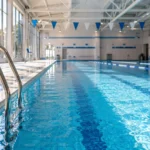
Legionella bacteria can spread through items such as shower heads, lawn sprinklers, air conditioning systems, and hot tubs and swimming pools; the latter being particularly common in holiday accommodation settings.


But isn’t it too cold for Legionella?
Surely the winter weather is too cold to support Legionella growth, isn’t it? You’d be right; the average UK winter temperature of 2 to 7 degrees celsius is well below the 20°C to 45°C sweet spot where Legionella thrives and multiplies.
However, Legionella bacteria can still survive at temperatures below freezing, lying dormant until the temperatures rise again.
Complicating matters is the prevention of mould. Many holiday let owners choose to keep the heating on at low temperatures throughout the winter, to prevent condensation as well as burst water pipes. (Keeping windows open can help to prevent condensation too, but your insurer probably won’t be too happy with you if you’re leaving them open while there’s nobody home!)
If set too high, the heating warmth can be just enough to push water supplies into the legionella danger zone. And of course, when the warmer weather rolls around, lingering legionella populations can rapidly grow even further…
What are holiday let owners’ responsibilities for preventing legionella?
At first glance, understanding where holiday lets sit in terms of legionella safety legislation. Does HSE consider you a landlord, an employer, or both?
Ultimately, it doesn’t matter; as a holiday let owner, you’re responsible under the Health and Safety at Work Act 1974 for controlling the risks of legionella at your holiday let property.
You’re legally required to carry out a legionella risk assessment and to implement appropriate prevention and control measures as outlined in the risk assessment.
If you don’t have one, and a guest or employee becomes infected, you could face a hefty fine or even imprisonment.
If you use a letting agent, make sure it’s clear in your contract with them whether yourself or your letting agent is responsible for fulfilling legionella safety measures. If there’s any doubt, it’s generally assumed that the property owner is responsible.

How to prevent legionella growth during the winter off-season
There’s a few different strategies for combatting legionella during the winter; but here at Dynamika, we’d recommend draining your hot and cold water system entirely.
Without any water left to stagnate (or freeze the pipes), the whole system will be much safer until it’s time to refill it and reopen your holiday let to guests.
- First things first, begin by turning off your boiler and immersion heaters at the gas/electricity supply.
- Shut off your water supply at the stopcock and at the water meter outside the property.
- Open up all the hot and cold taps (including any outdoor taps), starting with the taps on the highest floor and moving down to the lowest floors. Let them drain out entirely and leave the taps open afterwards.
- Flush your toilets thoroughly – you might need to hold down the handle for longer than usual – then open up the cisterns and tie up the float valve
- If your holiday let has a dishwasher, washing machine and/or any other water appliances, it’s wise to drain these too. Consult the manufacturer’s manuals for information on how to drain the appliances.
- Take a look at your water storage tank. The previous steps should have helped to clear it out; but there may still be some residual water to be mopped up with a sponge or sucked up with a wet vacuum cleaner.
- Drain your hot water cylinder by attaching a garden hose to the bottom outlet and opening the stopcock. Run the hose out to an outdoor drain; don’t let the water drain onto your lawn as it can harm the grass.
- Don’t forget to drain any swimming pool or hot tub facilities that your holiday let might have; these will need to be drained thoroughly as well.
You can then switch your boiler back on! Turning off your mains water won’t affect your central heating, and you won’t need to drain your boiler and radiators unless you plan on leaving your central heating turned off all winter. (We’d advise keeping it on, to combat the condensation.)
What if I still have infrequent bookings in winter?
When it comes to the unpredictable nature of holiday lets, sometimes turning everything off for winter just isn’t an option.
If your holiday let will remain occasionally occupied by guests during winter, there are still steps you can take to minimise the risks of legionella.
The exact steps, though, will of course depend on the particular water facilities at your holiday property – and should be outlined properly in your legionella risk assessment and safety plan.
In general, you should ensure that your hot and cold systems are being regularly flushed through; which will likely require regular visits to the property whenever it goes unoccupied.
Take care to avoid splashing and aerosolising water when doing this. Keep toilet lids down, open taps slowly, and remove shower heads, garden hose nozzles and sprinkler heads before running water through them.
Pay particular attention to keeping shower heads, sprinklers, A/C systems and swimming/spa facilities regularly cleaned and sanitised.
You should also examine your water tank for any signs of damage or contamination. (We’ve put together a maintenance checklist for industrial water tanks, but many of the same points apply to domestic tanks too.)
Conclusion
We might think of legionella as a problem that only big companies with large industrial facilities have to deal with; but in the right circumstances, even domestic properties like holiday lets can be affected.
As a holiday let owner, make sure you’re staying up to date with your legal duties and keeping your guests safe. Preparing your property now in the winter season could help you avoid some serious headaches when the summer season rolls around again.
Dynamika’s water experts offer a complete range of services to help holiday lets in the south of England combat the dangers of legionella; including legionella risk assessments, water quality testing and more. Call us on 03333 22 0800 or contact us online today.