
Four big water myths and misconceptions
When it comes to the water we drink and use everyday, there’s so much misinformation that it can be difficult to separate fact from fiction.
We’ve collected some of the more persistent myths around water quality and water management. Have you been caught out by any of them?
Let’s find out…



Myth #1: ‘Water is infinite’
As you might already know, the wastewater we produce eventually comes back to us as fresh drinking water via the magic of wastewater treatment plants.
Doesn’t that mean that water is effectively infinite?
Unfortunately, it doesn’t really work like that:
- Only a small percentage of our wastewater gets directly purified back into safe drinking water.
- The rest is filtered and treated too, but instead sent back to natural sources like rivers and seas, where it goes through the regular water cycle again and again.
- The wastewater treatment process is very energy-intensive, and uses finite chemical resources for disinfection. The same is true for the water treatment plants which disinfect the drinking water from streams and reservoirs before it reaches consumers.
- While plants are built to process vast amounts of water, they’re ultimately limited in capacity and processing speed; not to mention the speed of the water cycle that feeds them. Plus, excessive rainfall or flooding can quickly take them offline.
And this just encompasses fresh water sources. If we want to try and utilise seawater for things like drinking supplies and crops irrigation, it requires desalination; currently a very expensive and environmentally-harmful process.
Ultimately, conserving the water we do have – whether it’s ‘at the office’ in commercial water applications, or just at home – is the more cost-effective option for all of us.
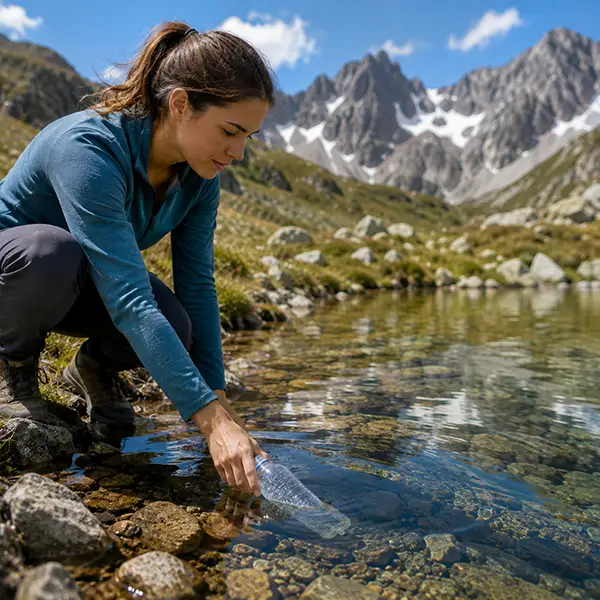
Myth #2: ‘Clear water is always safe to drink’
Surely if your water looks fine, smells fine and tastes fine, it must be safe to drink; right?
If only that was the case, our job here at Dynamika would probably be a lot easier!
Sadly, even clear water can harbour microscopic bacteria, pesticides, heavy metals and other harmful micro-organisms, chemicals and pollutants.
Conversely, discoloured or smelly water may actually be perfectly safe to drink (depending on the kind of discolouration or smell).
How can you tell the difference?
There’s no quick and easy way of confirming water safety, unfortunately; the best way is to invest in a water quality testing kit or hire a water testing company that can provide laboratory testing.

Myth #3: ‘Chlorine in water is dangerous’
Many of us are surprised when they learn that our water suppliers use chlorine in our drinking water. Isn’t that the stuff they put in swimming pools that smells really strong and makes our eyes sting? How can that possibly be safe to drink?
The first thing to know is that the chlorine dosages for drinking water (around 0.5mg per litre of water) are dramatically lower than swimming pools (around 3mg per litre).
(Incidentally, it’s not the chlorine that creates sore eyes and that familiar swimming pool smell, but the chloramine that comes from chlorine’s reaction with pool ammonia.)
It’s true that chlorine can react with organic matter often found in drinking water sources, producing potentially harmful by-products in the process.
These disinfectant by-products (known as DBPs) are tightly regulated by the water industry, with water suppliers legally obligated to ensure that DBP levels in drinking water are maintained within safe levels.
How do they do this?
Typically, water companies filter out organic matter from water sources prior to introducing chlorine disinfection. They also minimise DBP formation by carefully managing things like chlorine dosage, water temperature and pH balance.
Chlorine ultimately plays a big role in protecting us all from potentially deadly water-borne diseases and pathogens.
Myth #4: ‘Tap water is less safe than bottled water’
Intuitively, it seems obvious that expensive bottled water would be better in quality than the ordinary water we get from the tap, right?
What if we told you that here in the UK, tap water is just as safe as the bottled water you’ll find in the supermarket; and in some cases might actually be safer?
Unlike tap water which is monitored by the Drinking Water Inspectorate, bottled water is overseen by local councils and regulated by the Food Safety Act.
Tap water is tested continuously – often daily – and the results of those tests are regularly released to the public online.
However, bottled water manufacturers are only legally obligated to carry out chemical and microbiological testing once a year; and testing results rarely see the light of day.
As you might expect for a product that comes in a plastic bottle, you’re more likely to find microplastics in bottled water, too; not to mention that the bottle itself contributes to plastic waste.
And not all bottled water is created equal, either. Bottled water comes in three different types:
- Natural mineral water
- Spring water
- ‘Bottled drinking water’ (aka ‘table water’)
Spring water and bottled drinking water doesn’t need to maintain ‘purity’ during the collection and bottling process, and the composition of the water doesn’t need to be included on the label.
Meanwhile, mineral water – despite being generally more stringently regulated than other types of bottled water – is still allowed to contain higher quantities of certain chemicals than tap water.
Both tap water and bottled water are essentially safe to drink; but if you’re looking for the safest option over the long term, you’re probably best off sticking with tap water.
Need to confirm the cleanliness of your water supply? Or looking to sanitise your site’s water systems?
Dynamika are specialists in water quality testing and disinfection, serving clients across Southampton, Portsmouth and the South Coast.
Get in touch on 03333 22 0800 for a consultation today.