
Legionella at schools: what’s the risk?
It’s time for another instalment in our ‘What’s the risk?’ blog series!. This time, Dynamika director Brett Wallace teaches us a lesson about legionella at schools and other educational premises…
Can you believe the six-week holidays are already here?
Millions of kids across the country will soon be enjoying time for themselves in the sun; but for schools, the preparation for the autumn term will already be well underway.
And it’s not just lesson plans, staff meetings and budget planning that schools need to consider – it’s also the unseen dangers of legionella.
Every day’s a school day; so let’s learn about how schools can keep their students and staff safe from deadly legionella outbreaks…


How can legionella grow and spread at schools?
As a quick reminder, legionella bacteria can multiply rapidly within water sources which are stagnant or otherwise poorly maintained; particularly in warmer conditions from 20°C to 45°C.
Contaminated water can then potentially spread through the air as tiny aerosolised water droplets. These can lead to life-threatening Legionnaire’s disease if they’re inhaled by individuals.
The good news is that many school premises present around the same level of legionella danger as a typical office building; in other words, not much.
What’s more, school-age children are considered very low-risk for contracting Legionnaire’s disease.
That said, there are a few interesting risk areas to watch out for; and depending on their particular facilities, some schools may carry more risk than others.
(Keep in mind that teachers, staff members and visitors – particularly those over 40 years of age – are far more susceptible to contracting Legionnaire’s disease.)
- Drinking fountains and bathroom faucets can produce aerosolised droplets, though in relatively small numbers.
- Showers in PE changing rooms present a greater level of risk; not just because they produce aerosol droplets in much greater numbers, but also because they’re more likely to sit unused for longer periods.
- Catering facilities, kitchens and drinks dispensers/ice machines can harbour and spread legionella; particularly as their open hours can be sporadic throughout the school day.
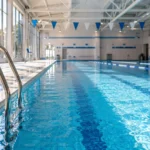
- Schools with on-site PE swimming programs need to take extra care to prevent legionella. As we covered in our previous blog, swimming pools are particularly challenging environments for controlling legionella growth.
- D&T and science department facilities (such as food tech kitchen faucets, emergency eye wash stations and jet cutter machinery) can present their own legionella risks. Again, the infrequent use of these facilities can result in stagnant water where legionella can thrive.
Complicating all these is the matter of several half-term periods throughout the school year, where the school may remain unoccupied for weeks at a time. It’s important to ensure that all water outlets are regularly flushed to prevent water stagnating within pipework.
Who’s responsible for managing legionella in schools?
The Health and Safety at Work Act 1974 and the Control of Substances Hazardous to Health (COSHH) determine that schools have a legal obligation to protect students and staff from legionella risks.
What’s more, cases of legionellosis in staff should typically be reported to the Health and Safety Executive under the Reporting of Injuries, Diseases and Dangerous Occurrences Regulations (RIDDOR).
As outlined in the health and safety guidance for schools on GOV.UK:
“The employer or, in the case of independent schools, the proprietor, is accountable for the health and safety of school staff and pupils. The day-to-day running of the school is usually delegated to the headteacher and the school management team. In most cases, they are responsible for ensuring that risks are managed effectively. This includes health and safety matters.”
(The ‘employer’ in this case refers to the governing body, local authority or trust that owns the school.)
In other words, if a child, staff member or visitor falls sick from legionella exposure, the school owner will usually be held responsible. The headteacher and school management team may also share some of the legal repercussions.
And the punishments for health and safety non-compliance can be severe. School owners and/or management staff can face hefty fines or even life imprisonment; especially if there are fatalities from Legionnaire’s disease.


What do I need to do to prevent legionella at my school?
As always, it’s best to follow the legal guidance laid out in ACoP L8, which recommends:
- Carrying out a full legionella risk assessment (including all water outlets and on-site water facilities)
- Designing and implementing a control scheme
- Appointing a responsible person(s) to manage implementation (typically the headteacher and/or senior maintenance staff)
- Monitoring water systems to verify efficacy of control measures
- Reviewing risks and control schemes periodically
Remember, while online risk assessments provide a good starting point, all recordings of risks and control measures should be tailored to your particular school property.
Unfortunately, the six-week half term break brings extended periods of inactivity and warmer weather; potentially creating the ideal conditions for legionella growth.
Make sure your risk assessment and control measures address the extended break, as well as other half-term periods throughout the year.
What about school trips?
It’s worth noting that schools’ legionella health and safety responsibilities also extend to after-school clubs and external school trips.
In a scenario where someone gets sick from legionella exposure during a school trip, responsibility will likely fall solely on the venue or transport provider where the outbreak originated.
However, schools still need to carry out due diligence before embarking on any school trip.
This includes completing a risk assessment, and may include checking the health and safety policies of trip venue organisations and transport providers.
Need a helping hand with your school’s risk assessment?
Dynamika provides expert legionella risk assessments for schools across the south, as well as professional water quality testing and chlorination to keep your school site safe. Call us on 03333 22 0800 to book a consultation today!